LESSON TITLE: Interesting Islands and Practical Peninsulas
Teacher’s Name: Melissa Khalil Date: August 21, 2011
BACKGROUND
Brief Description of Group to be taught: This lesson is intended for a 1st grade class of approximately 20 students. Theclassroom ranges in levels of achievement with some students that are on IEP’s.
Overall Purpose: (Geography, Arts) The overall purpose of this lesson plan is to focus on content knowledge. The students will learn the two terms, island and peninsula and recognize the features between the two. Students will construct an island and a peninsula using play-doh.
Relationship of this lesson to curriculum/theme: This lesson theme correlates directly to the corresponding thematic unit of geography. Students will work individually and collectively in order to accomplish their final project that will be formed with play-Doh
Massachusetts Curriculum Frameworks Strand and Learning Standard(s):
· Massachusetts History and Social Science, August 2003, 2.cs.4: Describe how maps and globes depict geographical information in different ways
· Massachusetts Curriculum Frameworks Arts, 1.1 Use a variety of materials and media, for example, crayons, chalk, paint, various kinds of papers, textiles, and yarns and understand how to use them to produce different visual effects.
· Massachusetts Curriculum Frameworks Arts, 1.2. Create artwork in a variety of two dimensional (2D) and three dimensional (3-D) media for example: 2D drawing, painting, collage, printmaking, carving, 3D plastic (malleable) materials such as clay and paper, wood or objects for assembly and construction.
Behavioral Objectives/Learning Outcomes for students:
Content:
· The learning outcomes for this lesson are for students to master knowledge of the terms Island and peninsula.
· Children will be able to construct their Island and Peninsulas based on their knowledge of the features
· Behavioral outcomes would be that all the students work corporately and be able to collaborate ideas in groups as well as work individually.
Language:
· Students will be able to explain and present their sculptures to the group.
Materials: (Please attach any handouts to lesson plan):
· Play-doh compound (brown and green) enough to form an island and peninsula
· Piece of blue construction paper
· World map
· Drawing paper, pencils, and markers
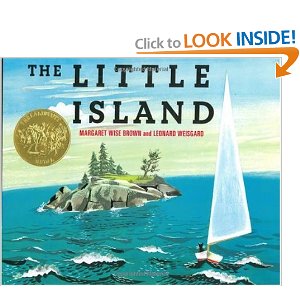
· The book The Little Island by: Margaret Wise Brown
Procedures: Instructional Practice:
· Begin the lesson by reading the book The Little Island. Explain to the students that we use special names for certain
andforms. (10 -15 minutes)
· Using a world map point to the continent Australia. Ask students what they notice about the continent that is different from the other continents. Talk about the term island. (5 minutes)
· Point to Florida and ask students what they notice what is different about the two landforms. Talk about the key word peninsula. (5 minutes)
· Take time to find other examples of islands and peninsulas on the world map. (5-10 minutes)
· Pass out construction paper and play-doh. At the top of the page have students mold a form that looks like a peninsula. Next, have the students mold an island. (10 minutes)
· Allow the students some time at the end of class to explain their creation and why they created the two landforms the way that they did. (15-20 minutes)
Motivational techniques: (Activators): Tell the students that we are going to learn different types of landforms and after we become more familiar with them we will construct these landforms out of play-doh. I will use visual arts as a motivatio
Wrap up (Summarizers):
The whole class will come together and present their clay sculptures to the group while explaining why they constructed the landform in the way that they did.
Assessment: (Evaluation of Behavioral Objectives/Learning Outcomes)
Each student will have made the landform based on their knowledge of the two terms discussed. They also should be able to identify one island or peninsula on the world map.
Adaptations/Modifications for students
This activity could be adapted for grade 2 students. A possible extension to this plan could be that students may use pencil, paper, and markers to draw their island and peninsula. They may want to add more features to the island and peninsula. Students may also research about other types of landforms and what makes them the way they are.
.
.
| |